

Children born preterm face a higher risk of hospitalization for respiratory tract infections beyond infancy. Yet researchers know less about how major shifts in pathogen circulation affect that risk. A Norwegian nationwide registry study involving IMPROVE PRETERM researchers examined how this risk changed before, during, and after COVID-19 control measures. Researchers from the Norwegian University of Science and Technology (NTNU) and partner institutions analyzed data on more than 265,000 children aged 1 to 5. Hospitalization rates fell across all gestational age groups during extensive control measures, then rose as measures eased. Children born at lower gestational ages experienced the largest absolute changes, with children born extremely preterm having the highest hospitalization rates. Children born late preterm, at 34 to 36 weeks, represent the largest preterm group and also faced higher hospitalization risk than children born at term. Published in BMJ Paediatrics Open on September 1, 2026, the findings highlight continued vulnerability to respiratory infections beyond infancy. They suggest that prevention strategies reaching a broader range of children born preterm could offer substantial public health benefits, particularly when respiratory infections circulate widely.
Respiratory Risk Continues Beyond Infancy
Children born preterm remain more susceptible to severe respiratory tract infections after the first year of life. Earlier Norwegian research cited by the authors found about twice the risk of lower respiratory tract infection hospitalization at ages 1 to 5 among children born late preterm. Children born extremely preterm faced approximately ten times the risk of children born at term.
The new study asked how these differences changed when the circulation of respiratory pathogens shifted sharply during the COVID-19 pandemic. In practical terms, the researchers wanted to know whether hospitalizations among children born preterm rose and fell in the same way as those among children born at term. They also examined whether the changes were more pronounced at lower gestational ages.
The researchers linked records from the Medical Birth Registry of Norway and the Norwegian Patient Registry. The data covered children born from 2012 through 2021 and hospital admissions from 2017 through 2022. The team counted hospitalizations with a respiratory tract infection as the primary diagnosis. For the main analysis, researchers divided the children into three gestational age groups. These were 23 to 33 weeks, 34 to 36 weeks, and 37 to 41 weeks.
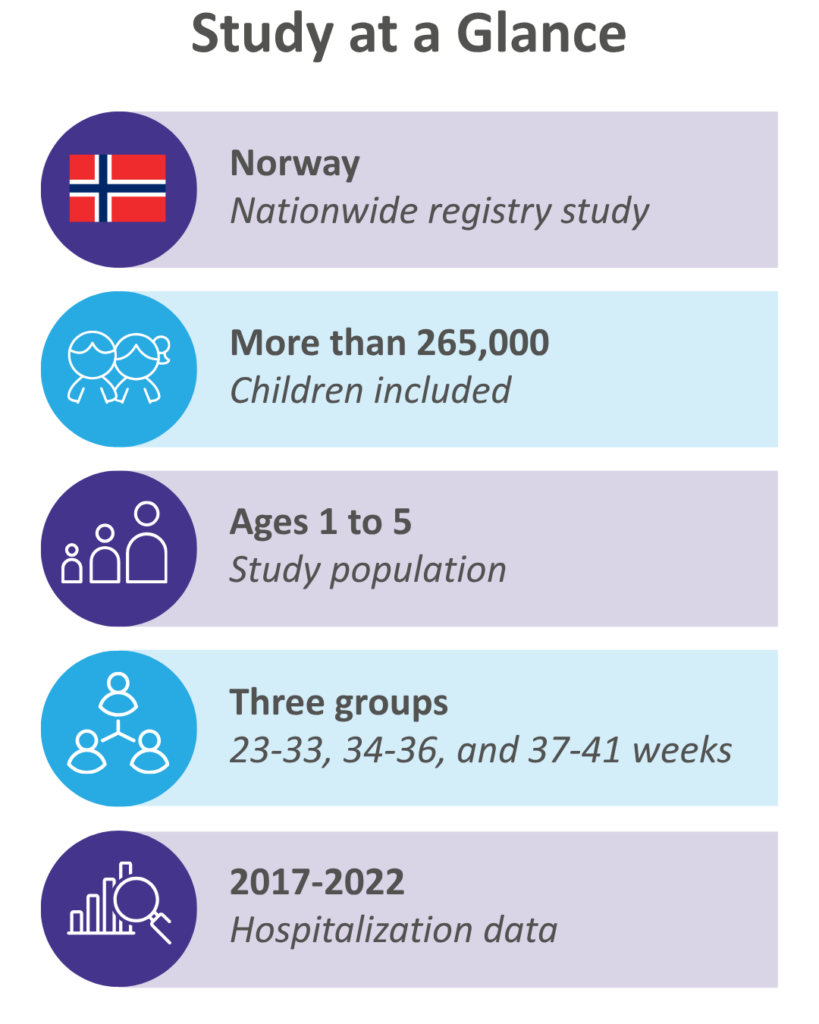
The team used data from January 2017 through March 2020 to model expected monthly hospitalization rates. The model accounted for the strong seasonal pattern of respiratory infections. Researchers then compared those estimates with observed rates from April 2020 through December 2022. This approach showed when hospitalization patterns departed from pre-pandemic expectations.
Respiratory Infection Hospitalizations Fell During Control Measures
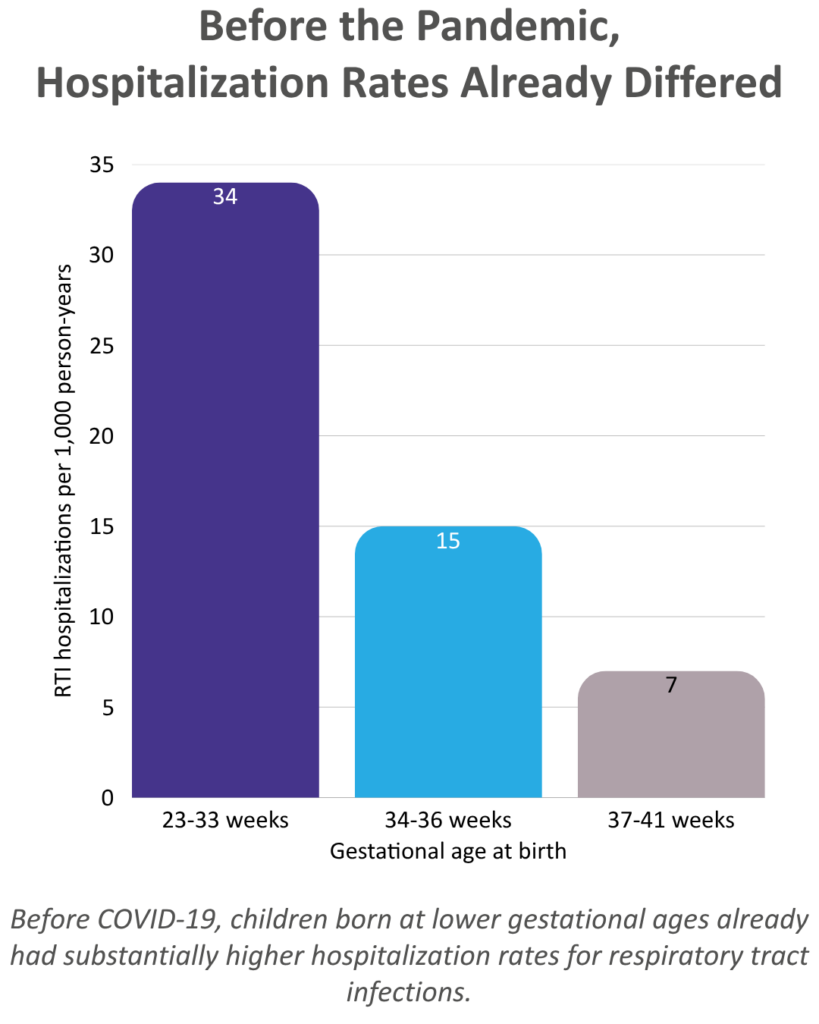
Before the pandemic, hospitalization rates already differed clearly by gestational age. Researchers recorded 34 respiratory tract infection hospitalizations per 1,000 person-years among children born at 23 to 33 weeks. The corresponding rates were 15 among children born late preterm and 7 among children born at term.
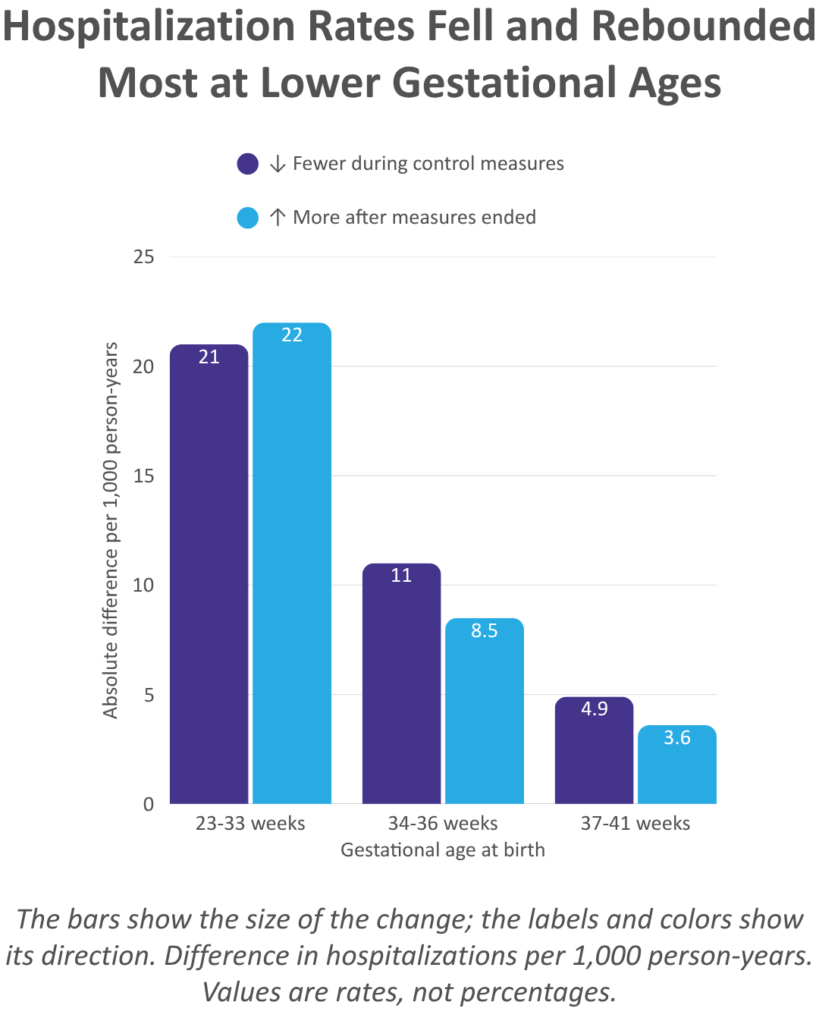
During the first pandemic year, observed rates fell below the modeled rates in every group. Among children born at 23 to 33 weeks, there were 21 fewer hospitalizations per 1,000 person-years than predicted. The differences were 11 fewer for the late preterm group and 4.9 fewer for the term group. These figures describe differences in hospitalization rates, not percentage reductions. Reporting rates per 1,000 person-years allows researchers to compare groups of different sizes and follow-up periods.
In practical terms, all three groups experienced fewer hospitalizations while respiratory infections circulated less widely. Notably, the largest numerical reduction occurred among children who already faced the highest hospitalization risk. This suggests that limiting exposure to respiratory infections may have particular value for children born at lower gestational ages.
Hospitalizations Rose as Infections Resurged
As control measures eased in 2021, respiratory infection hospitalizations rose sharply and outside their usual seasonal pattern. In October 2021, rates reached 113 per 1,000 person-years among children born at 23 to 33 weeks. They reached 62 in the late preterm group and 22 in the term group.
From April through December 2022, rates remained above the levels predicted from pre-pandemic data. The differences were 22 additional hospitalizations per 1,000 person-years in the 23-to-33-week group, 8.5 in the late preterm group, and 3.6 in the term group.
By December 2022, the cumulative number of hospitalizations in both preterm groups was close to the expected number. The later rise had therefore largely offset the initial reductions. In the term group, the cumulative total remained 370 admissions below the expected number.
Higher Respiratory Risk Also Extends to Late Preterm Children
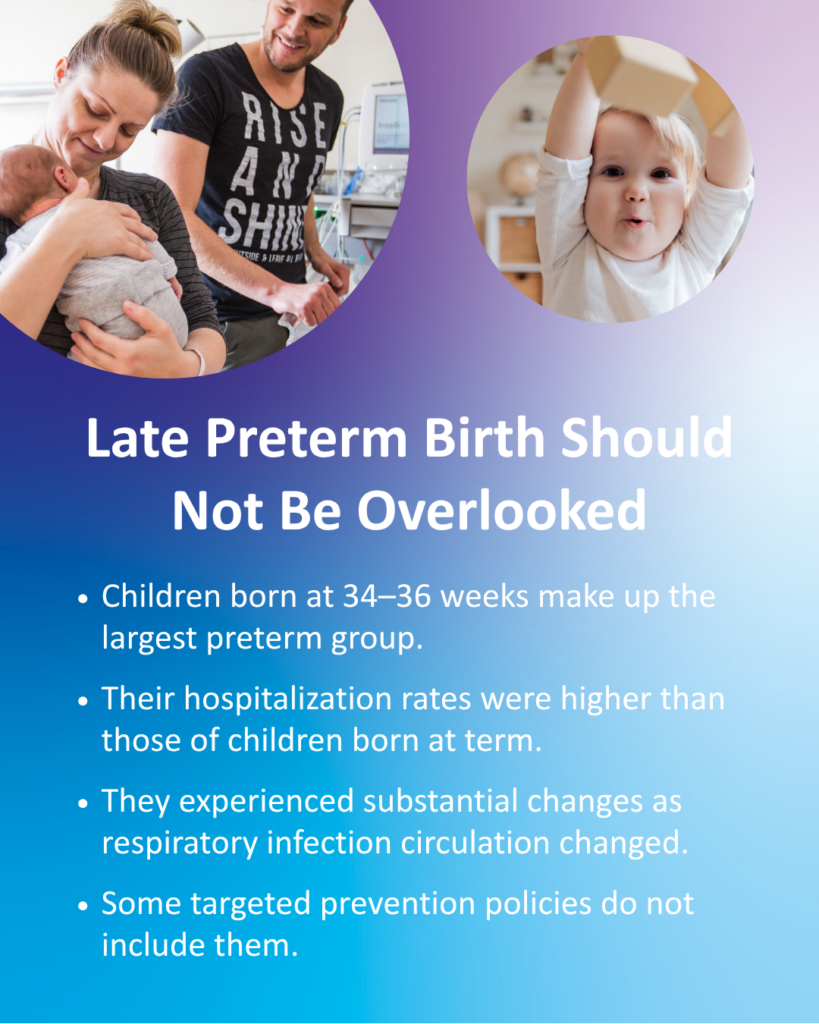
The highest rates of hospitalization for respiratory tract infections occurred among children born at the lowest gestational ages. An additional analysis found that children born extremely preterm had the highest rates. Still, the findings also draw attention to children born late preterm, at 34 to 36 weeks.
This group makes up the largest proportion of children born preterm. The authors note that targeted prevention policies, including some vaccination policies and RSV prevention programs, do not always include them. Their clear response to changes in community transmission suggests that prevention strategies with broader reach across preterm groups could have a meaningful public health impact.
Putting the Findings into Context
Using nationwide registry data gave the researchers near-complete population coverage. This allowed them to identify broad hospitalization patterns across gestational age groups and over several years.
Because the registry records hospital admissions, the study focused on how often children were hospitalized rather than the detailed course of each illness. It also considered respiratory tract infections together instead of measuring the contribution of individual pathogens. The authors identify RSV as a likely major contributor, but the study was not designed to determine its specific role.
These features make the study well suited to examining population-level changes in hospitalization rates. Questions about individual pathogens and the clinical severity of particular cases remain topics for further research.
Connecting the Findings to IMPROVE PRETERM
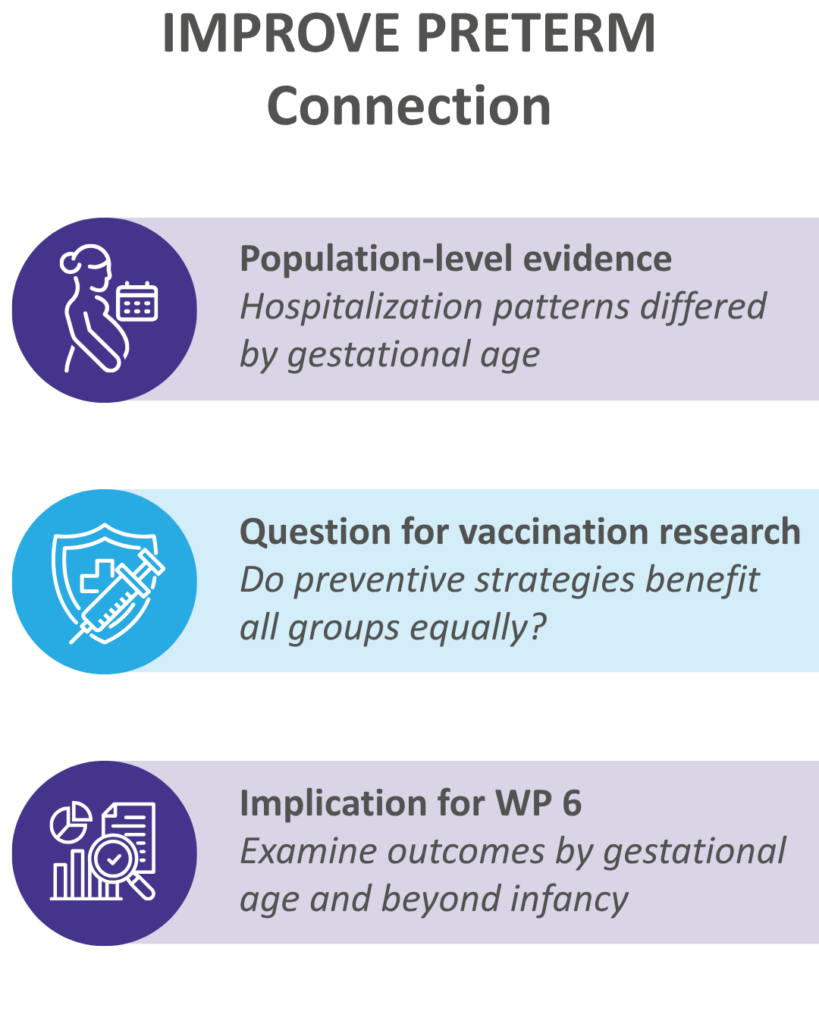
This paper is an IMPROVE PRETERM-supported publication that includes several project researchers. Its findings are directly relevant to the Vaccination Use Case in Work Package 6, led by NTNU.
The study does not evaluate a particular vaccine or RSV prevention approach. Instead, it identifies factors that future evaluations of these strategies should consider. Looking only at overall hospitalization rates could obscure the much larger changes experienced by children born preterm because children born at term make up most of the population.
Examining results separately by gestational age and age can provide a clearer picture of which groups benefit from a prevention strategy and which remain at higher risk. The findings also suggest that prevention research should not focus exclusively on infancy or on children born extremely preterm. Children born late preterm experienced substantial changes, and increased respiratory risk continued between ages 1 and 5.
The Main Takeaway
The study answers its central question clearly. Children born preterm did not simply follow the same hospitalization pattern as children born at term while starting from a higher rate. They also experienced larger absolute decreases during extensive COVID-19 control measures and larger increases after the measures eased.
The changes were greatest among children born at lower gestational ages, but they were also substantial among children born late preterm. This suggests that children born preterm are more strongly affected when the circulation of respiratory infections changes.
The findings do not identify one preferred prevention strategy or suggest that broad pandemic restrictions should return. Instead, they support the authors’ call for tailored approaches to prevent severe respiratory infections among children born preterm, particularly when respiratory pathogens are circulating widely.
Read the Study
Asheim A, Risnes K, Todd I, et al. Hospitalisations for respiratory tract infections in preterm and term born children aged 1-5 years before, during and after COVID-19 control measures: an interrupted time-series analysis. BMJ Paediatrics Open. 2026;10:e004270. doi:10.1136/bmjpo-2025-004270.