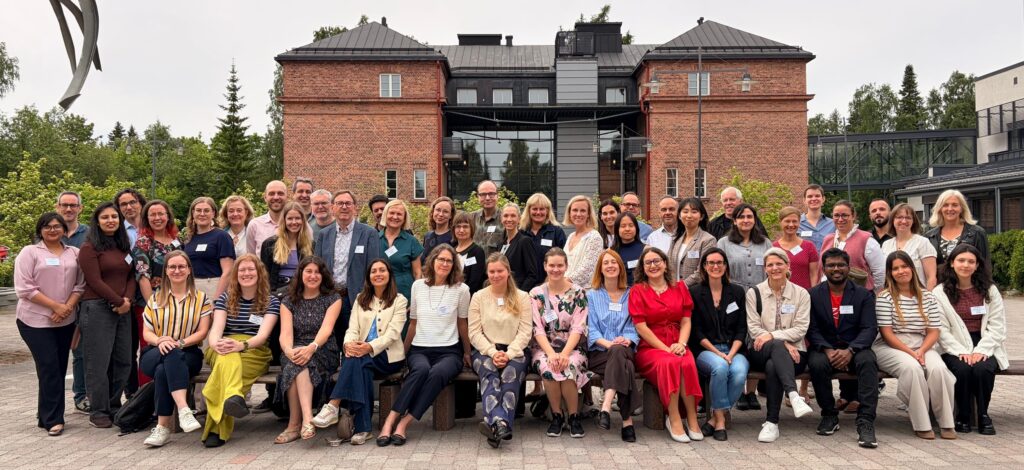
The IMPROVE PRETERM General Assembly took place in Oulu, Finland, on June 8 and 9, 2026, as part of the project’s Second Plenary Meeting. Hosted by the University of Oulu and organized by Professor Eero Kajantie and his team, the meeting brought together more than 50 participants in person, with other attendees online, to review progress from the first 18 months of the project and plan the next phase of work.
The IMPROVE PRETERM General Assembly created space for scientific exchange, strategic planning, and cross-work package discussion. Over two days, partners discussed early results, ongoing research activities, methodological developments, data infrastructure, stakeholder involvement, and communication. The meeting marked an important transition point for IMPROVE PRETERM: from reviewing the scientific literature and investigating the policy context in participating countries during the first project period to launching innovative original research in the months ahead.
“The Oulu meeting was an important opportunity to bring together the work carried out during the first 18 months of IMPROVE PRETERM and to set the stage for exciting new research studies in the next phase,” said Professor Jennifer Zeitlin, IMPROVE PRETERM Project Lead. “By connecting methodological research, clinical expertise, data infrastructure, and the perspectives of families and stakeholders, we can build on existing knowledge and capacity to generate new evidence to improve lifelong health after very preterm birth.”
Reviewing Progress Across the Project
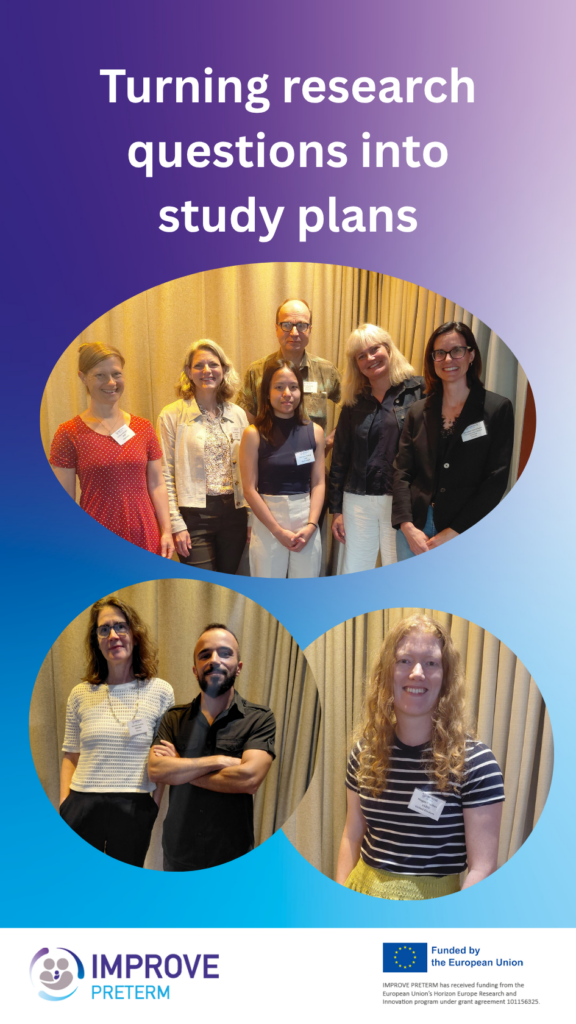
The first day of the General Assembly focused on results from the project’s first period. Presentations and discussions looked at how different work packages contribute to the overall aim of IMPROVE PRETERM: improving lifelong health and development for children and adults born very preterm.
A central topic was the development of a lifecourse framework for comparative effectiveness research in very preterm populations. Partners discussed capacity gaps in methods and data, economic evidence, and stakeholder consultations. These discussions helped connect different parts of the project and identify how methodological work, clinical research, and stakeholder perspectives can support one another.
The meeting also included updates on IMPROVE PRETERM’s research use cases, which focus on high-priority areas of care for children born very preterm. These include antenatal and postnatal corticosteroid treatment, follow-up and early intervention programs, and vaccine strategies. In the first period, the use cases provided new information about the policy context, clinical guidelines and current practices in European countries regarding these three areas. Identifying differences in approaches opens up new avenues to studying these topics using observational data, registers, trials, and comparative effectiveness research methods, enabling the project to generate evidence that can support better clinical and policy decisions.
Developing PARCA-CAT as a Follow-Up Tool for Children Born Very Preterm
One major focus of the meeting was PARCA-CAT, a parent-reported tool designed to assess children’s cognitive development at 5 to 7 years of age. Well-designed and validated parent-report tools are essential for strengthening follow-up research, especially when studies aim to capture children’s development beyond infancy and early childhood. This period is highly relevant for understanding longer-term outcomes after very preterm birth, as questions related to learning, attention, language, memory, and problem-solving often become more visible when children reach school age.
The PARCA-CAT sessions illustrated the complexity of developing a tool that is scientifically robust, theoretically grounded, and practical for families to use. Partners discussed the final theoretical model behind the tool, item formats designed to support parent interpretation, and the need to balance psychometric quality with usability.
A key part of the work is translation and cultural adaptation. The questionnaire is being translated into eight languages – German, Italian, French, Flemish, Turkish, Estonian, Russian, and Swedish – with partners carefully reviewing how wording, response options, quantity terms, verb tenses, and examples can be understood across languages. This process helps ensure that the tool can be used consistently in different countries while remaining accessible to parents.
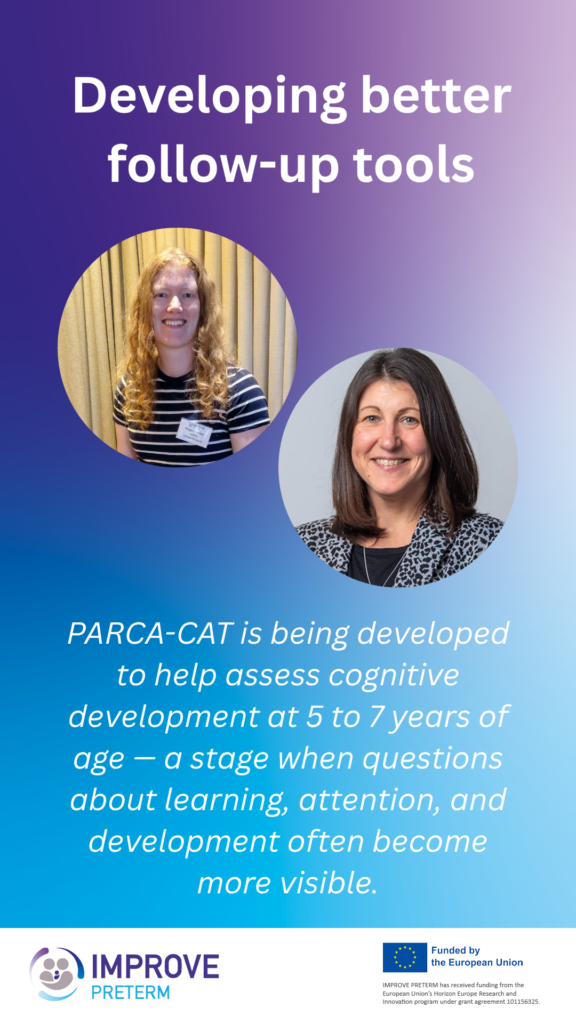
Looking ahead, the consortium will continue preparing the questionnaire for validation in Work Package 13, including digital data collection and further testing against established measures of children’s cognitive development.
Strengthening Research Through the RECAP Preterm Platform
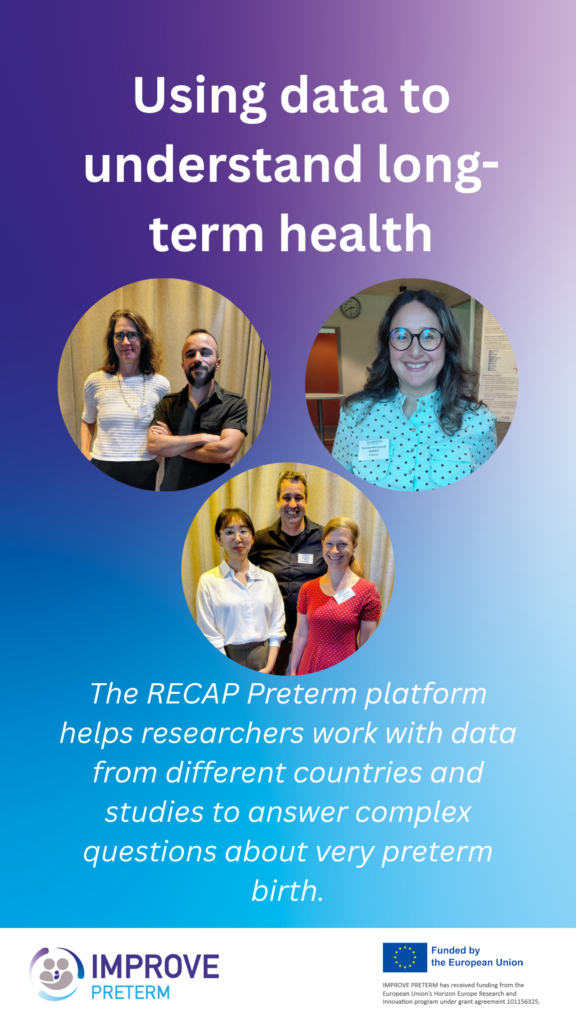
The RECAP Preterm platform was another key theme of the meeting. IMPROVE PRETERM builds on this existing European research infrastructure to bring together data from cohorts, registers, neonatal networks, and clinical trials. This creates opportunities to study questions that would be difficult to answer with one dataset alone.
Several presentations showed how the platform can support comparative effectiveness research and improve the use of existing data. Examples included work on growth after very preterm birth, the long-term impact of different causes of preterm birth, and the validation and comparability of parent-reported outcome tools. Partners also discussed how observational data can help researchers understand whether trial results apply to broader populations.
These discussions highlighted one of IMPROVE PRETERM’s key strengths: using existing data more effectively while improving comparability across countries and research settings. Data harmonization, methodological development, and careful analysis are essential for generating evidence that is reliable, relevant, and useful for future research and care. In this context, the consortium also reflected on the role of research infrastructures under the new European Health Data Space. Nienke Schutte, member of the IMPROVE PRETERM Scientific Advisory and Ethics Board, introduced key issues related to the new regulations and their implications for future data use in research.
Exploring Study Design, Simulation, and Real-World Evidence
On the second day, partners turned toward next steps in ongoing and upcoming work packages. A morning session focused on research use cases using registers, observational data, and quasi-experimental methods. These approaches are especially relevant when randomized trials are not feasible, ethical, or sufficient to answer all questions about very preterm care.
The discussion also explored how simulation approaches can support study planning. Simulations may help researchers assess whether a real-world policy change, practice variation, or natural experiment is suitable for a specific research design. They can also support questions about sample size, precision, and whether available data are strong enough to answer a given question.
These methodological discussions are an important part of IMPROVE PRETERM’s broader work: strengthening the evidence base for interventions around birth and in childhood, while making careful use of real-world data.
Centering Equity, Families, and Lived Experience
The General Assembly also emphasized the importance of equity and lived experience in very preterm research.
An external keynote by Professor Elizabeth Howell (University of Pennsylvania) focused on disparities in maternal and infant care, drawing on examples from the United States. The presentation highlighted how differences in access, quality measurement, staffing, communication, social risk, race, ethnicity, and insurance status can influence care and outcomes. For IMPROVE PRETERM, the keynote offered an important reminder that improving lifelong health after very preterm birth also means understanding where and why care differs between families, hospitals, and health systems.
Family and patient involvement were also central to the discussions. Mirva Rontti from Kevyt, the Finnish parent and patient organization, joined the meeting as a member of the Parent & Patient Advisory Board. Bringing perspectives as both a person born preterm and a parent of a child born preterm, she contributed insights that help connect research priorities with lived realities.
The Parent & Patient Advisory Board plays an important role in IMPROVE PRETERM by ensuring that the project remains connected to the needs, questions, and experiences of families and people with lived experience. Their perspectives help shape research, communication, and the way project results can become meaningful beyond the scientific community.
Communicating Research Clearly and Meaningfully
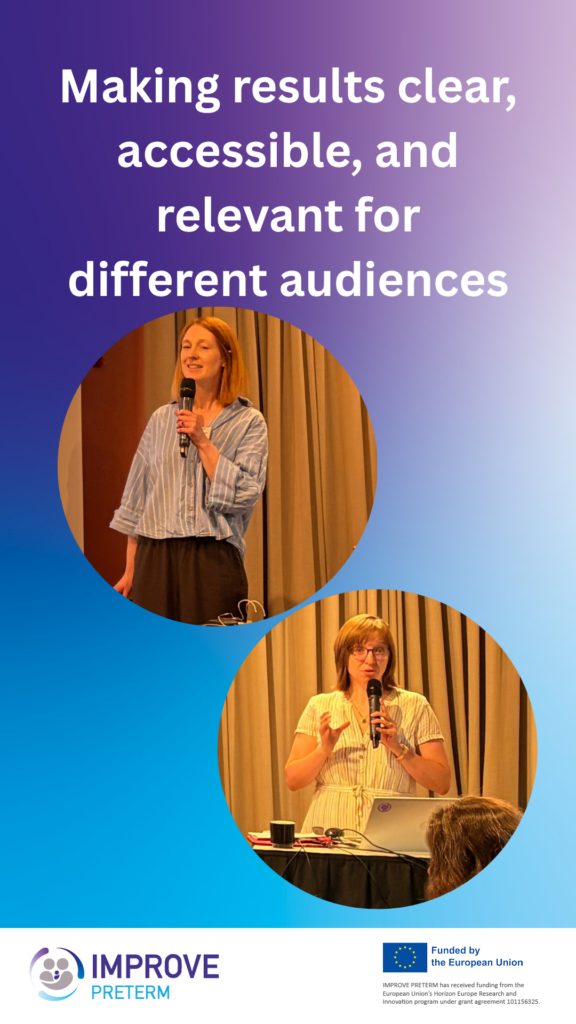
As IMPROVE PRETERM moves into its next phase, communication and dissemination will play an increasingly important role. During the General Assembly, partners discussed the project’s overall communication strategy, its communication channels and their use, and effective ways to make the work of consortium visible and meaningful to lay audiences.
Clear communication is essential for ensuring that project results reach the audiences who can use them: researchers, healthcare professionals, policymakers, parent organizations, families, and the wider public. The goal is not only to share results, but to make them understandable, accessible, and relevant to different communities.
This work is closely connected to the project’s overall mission. Strong evidence can only contribute to better care if it is communicated in ways that support understanding, trust, and action.
Next Steps After the IMPROVE PRETERM General Assembly
The Oulu General Assembly closed with discussions on project management, upcoming work, and future collaboration. Partners will now continue advancing their work across the project’s research use cases, methodological work, PARCA-CAT validation, platform development, stakeholder involvement, and communication activities.
The next consortium meeting will take place in Poznan, Poland, with project partner PUMS in June 2027.
IMPROVE PRETERM thanks the University of Oulu and Professor Eero Kajantie’s team for hosting and organizing the IMPROVE PRETERM General Assembly, and all partners, advisors, and contributors for two days of thoughtful exchange and collaboration. We look forward to the next steps ahead!